
 Save
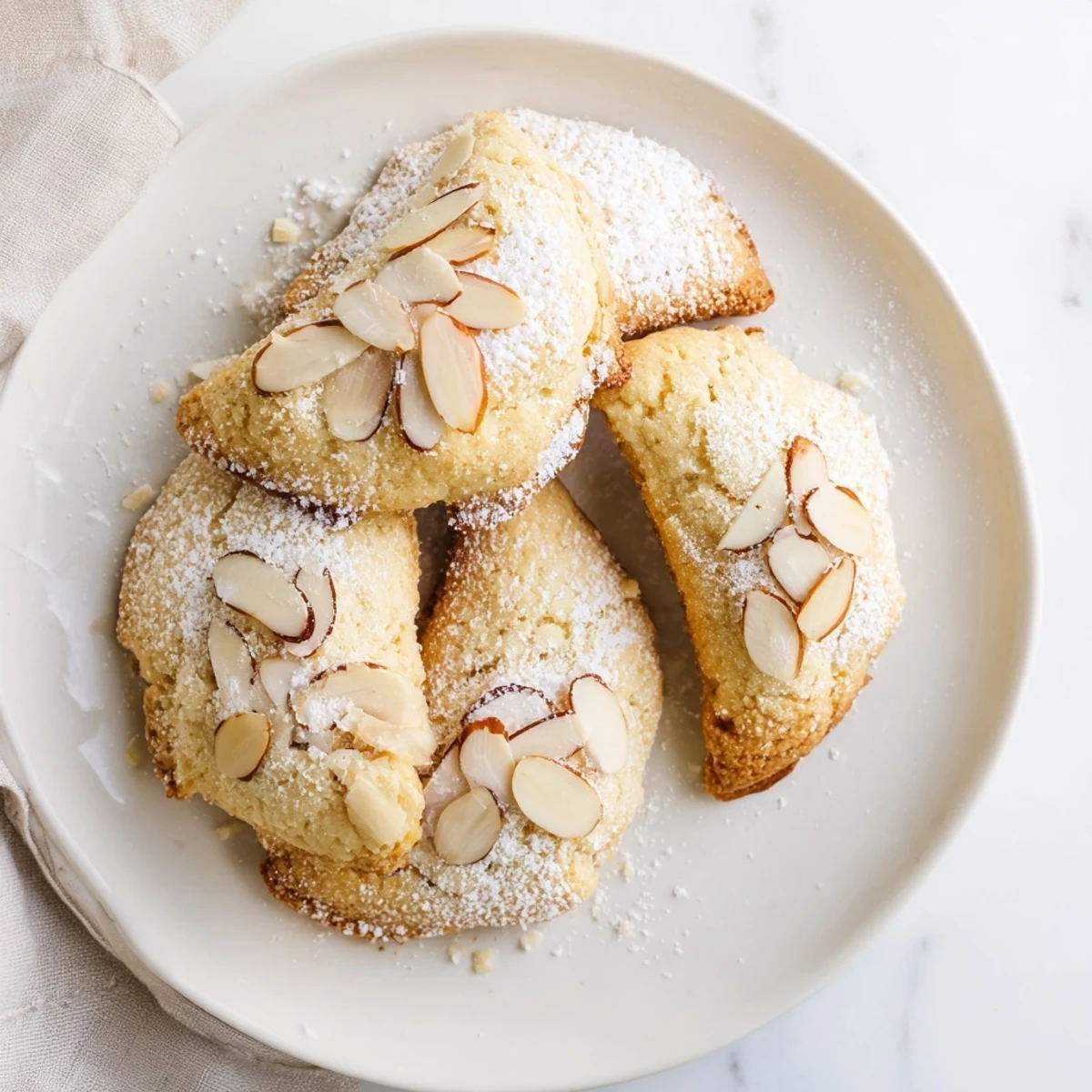
Save These delightful almond croissant cookies capture the essence of a French bakery favorite in a handheld form. The tender, buttery dough envelopes a sweet almond filling, while the exterior bakes to golden perfection with a satisfying crunch.
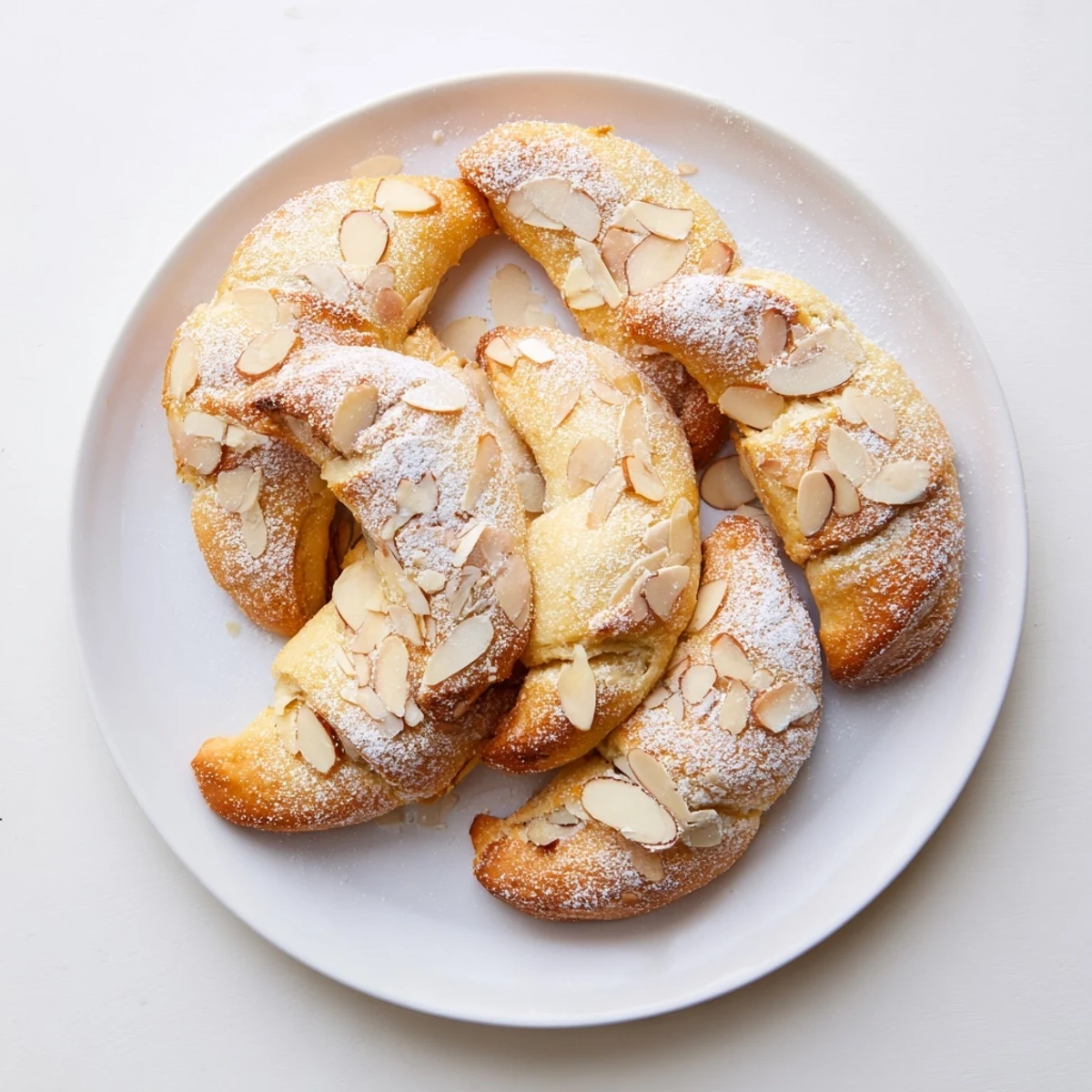
Each cookie is shaped into a classic crescent, rolled in sliced almonds for that signature croissant texture, and finished with a delicate dusting of powdered sugar. The preparation involves creating a soft, chillable dough, preparing a frangipane-style almond filling, then hand-shaping each cookie for that authentic bakery appearance.
Perfect for afternoon tea, coffee breaks, or elegant dessert platters, these cookies combine the rich flavors of almond and butter with the comforting familiarity of a classic croissant. The medium difficulty level ensures rewarding results for home bakers looking to expand their pastry skills.
There was this tiny French bakery around the corner from my first apartment where I'd sometimes treat myself to an almond croissant on Sunday mornings. The woman who owned it would slip me an extra one when they were about to close, saying these were meant to be shared, not wasted. I've spent years trying to capture that particular combination of buttery dough and fragrant almond cream in a form that doesn't require laminating dough for three days.
I made these for a brunch last spring and watched my friend Sarah close her eyes at the first bite, immediately asking if I'd secretly become a pastry chef overnight. She couldn't believe these humble-looking cookies packed such an authentic almond croissant flavor. Now they're the first thing she requests whenever I mention I'm baking anything.
Ingredients
- Unsalted butter (225 g): Use room temperature butter so it creams properly with the sugar, creating those tiny air pockets that make cookies tender
- Granulated sugar (130 g for dough, 65 g for filling): This amount sweetens without overpowering the delicate almond flavor
- Egg yolk: Adds richness and helps bind the dough while keeping it tender
- Vanilla extract: Pure extract makes a noticeable difference here
- All-purpose flour (250 g): Provides structure without making the cookies too tough
- Fine sea salt: Enhances all the flavors and balances sweetness
- Almond flour (70 g): Finely ground almonds create the most authentic filling texture
- Egg white: The protein helps set the filling during baking
- Almond extract: This is the secret to that unmistakable almond croissant essence
- Sliced almonds: Press them gently but firmly so they stay attached through baking
- Powdered sugar: Add this just before serving for that bakery finish
Instructions
- Preheat and prepare:
- Heat your oven to 350°F (175°C) and line two baking sheets with parchment paper so nothing sticks
- Cream the butter and sugar:
- Beat the softened butter and 130 g sugar together until the mixture looks pale and fluffy, about 3 minutes
- Add egg yolk and vanilla:
- Mix in the egg yolk and vanilla extract until everything's evenly combined
- Form the dough:
- Stir in the flour and salt just until a soft dough comes together, then cover and refrigerate for 15 minutes
- Make the almond filling:
- Combine the almond flour, remaining 65 g sugar, egg white, and almond extract in a medium bowl until smooth
- Shape the cookies:
- Divide the dough into 24 equal pieces, roll each into a ball, then flatten into rounds about 2 inches across
- Fill and seal:
- Place half a teaspoon of filling in the center of each round and fold the dough around it, pinching to seal into crescent shapes
- Add the almond topping:
- Press the sliced almonds onto the top of each crescent so they stick
- Bake until golden:
- Arrange the cookies on your prepared baking sheets and bake for 13 to 15 minutes until the edges turn golden brown
- Cool and finish:
- Let them rest on the baking sheet for 5 minutes before moving to a wire rack, then dust with powdered sugar once completely cool
 Save
Save My neighbor's daughter came over while I was testing this recipe and told me they tasted exactly like the croissants her Parisian grandmother sends care packages of. That might be the highest compliment I've ever received in my kitchen.
Making Ahead
You can prepare the dough and filling separately up to two days in advance, storing them covered in the refrigerator. Let the dough sit at room temperature for about 20 minutes before shaping, otherwise it'll crack when you try to work with it.
Getting That Bakery Finish
The powdered sugar dusting should happen right before serving, not immediately after cooling. If you dust too early, the sugar will disappear into the cookie surface and you'll lose that beautiful snowy contrast against the golden almonds.
Serving Suggestions
These are absolutely perfect alongside a strong coffee or cup of tea, the bitterness balancing all that buttery sweetness. I've also served them with vanilla ice cream for an unexpected dessert that makes guests feel incredibly spoiled.
- Try adding a tablespoon of amaretto to the filling for an adult version
- These freeze beautifully for up to a month without the powdered sugar
- They're actually quite elegant plated with fresh berries
 Save
Save There's something magical about transforming simple ingredients into something that tastes like it came from a patisserie window. These cookies have become my go-to whenever I need to make someone feel special.
Recipe FAQs
- → Can I make the dough ahead of time?
-
Yes, the dough can be prepared and refrigerated for up to 24 hours before shaping and baking. Bring it to slightly cool room temperature for easier handling, about 15-20 minutes.
- → What's the best way to achieve the crescent shape?
-
After flattening each dough portion and adding the filling, gently fold the dough over and pinch the edges to seal. Then curve into a crescent shape, similar to forming a traditional croissant.
- → Can I freeze these cookies?
-
Absolutely. Freeze unbaked shaped cookies on a baking sheet, then transfer to an airtight container. Bake from frozen, adding 1-2 minutes to the baking time. Baked cookies also freeze well for up to 3 months.
- → Why is my almond filling too runny?
-
The filling should be thick and spreadable. If it's too runny, the almond flour might be too coarse or the egg white too large. Add a tablespoon of additional almond flour to achieve the right consistency.
- → Can I use salted butter instead?
-
You can, but reduce the added sea salt to 1/8 teaspoon. The control over salt content is better with unsalted butter, allowing you to achieve the perfect balance of flavors.
- → How do I know when they're done baking?
-
The edges should be golden brown and the bottoms lightly caramelized. The centers will still feel slightly soft but will firm up as they cool. Avoid overbaking to maintain tenderness.