
 Save
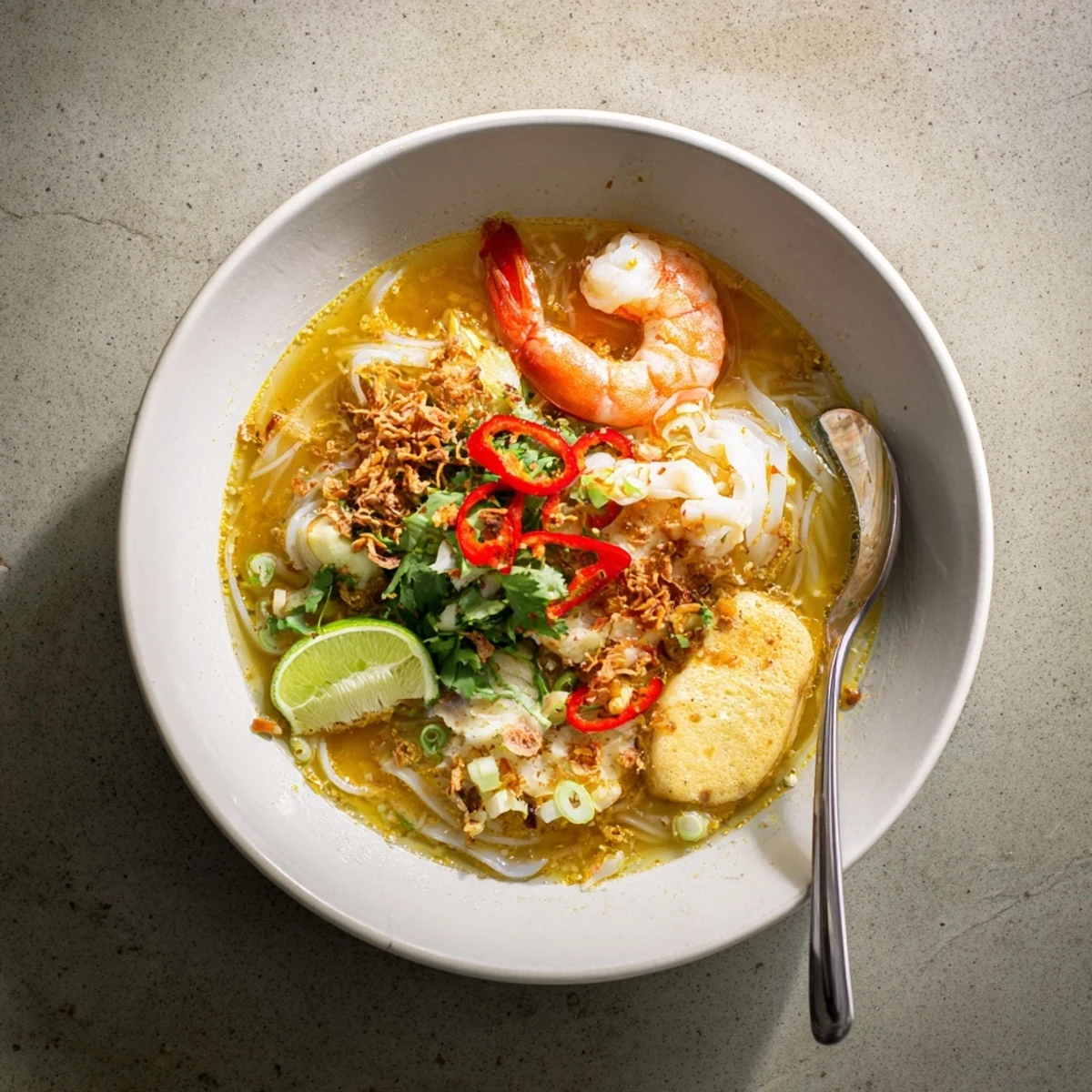
Save This comforting Vietnamese soup combines thick chewy tapioca noodles with fresh crab meat, shrimp, and sliced fish cakes in a fragrant broth. The base simmers pork bones with aromatics for depth, while seafood adds sweetness. Each bowl gets topped with fried shallots, fresh herbs, chili, and lime for bright contrast. The result is a hearty, satisfying meal that balances rich umami flavors with fresh garnishes.
Steam rises from the bowl, carrying that unmistakable aroma of crab and fried shallots that takes me straight back to my aunts tiny kitchen in Saigon. Her banh canh cua was never just a recipe, it was a morning ritual that started before dawn. She would insist that patience was the secret ingredient, hovering over the broth with a watchful eye, adjusting seasoning with the confidence of someone who has made this a thousand times. The thick, chewy noodles sliding through that rich, amber broth still feel like a warm embrace on cold days.
Last winter, I made this for friends who had never tried Vietnamese noodle soup beyond pho, and watching their expressions change from curiosity to absolute delight was genuinely rewarding. One of them took one sip of the broth and actually closed her eyes, saying it tasted like something from a street stall she had visited years ago. The table went quiet as everyone concentrated on their bowls, the only sounds being spoons clinking and appreciative hums. By the end, even the garnishes were gone, and someone was already asking when we could have it again.
Ingredients
- Chicken stock: The foundation of your broth, so use a good quality one or make your own for the best depth
- Pork bones: These add body and richness to the broth, and blanching them first keeps everything clear
- Yellow onion and garlic: Smashed garlic releases more flavor, and the onion sweetens as it simmers
- Fish sauce: The umami backbone, add it gradually and taste as you go
- Fresh crab meat: If you can get fresh crab in the shell, the sweetness is worth the extra effort of picking it
- Shrimp: They cook quickly and add a delicate sweetness that complements the crab
- Fish cakes: These add bounce and another layer of savory flavor to the bowl
- Banh canh noodles: Thick tapioca noodles that are incredibly chewy and satisfying, find them at Asian markets
- Fried shallots: Do not skip these, they add an essential crispy, savory element
Instructions
- Build the broth base:
- Combine your chicken stock with blanched pork bones, halved onion, smashed garlic, salt, and sugar in a large pot. Bring everything to a rolling boil, then lower the heat and let it simmer gently for about 30 minutes, skimming any foam that rises to the top.
- Season and strain:
- Stir in the fish sauce and let it cook for another minute, then remove the pork bones and onion pieces. Your broth should be fragrant and slightly golden.
- Cook the shrimp:
- Add the peeled shrimp to the simmering broth and cook for just 2 to 3 minutes until they turn pink and curl slightly. Remove them immediately so they do not overcook, and set them aside.
- Add the crab and fish cakes:
- Drop the crab meat and sliced fish cakes into the broth, letting everything simmer gently for 5 to 7 minutes. This allows the crab flavor to infuse into the broth while the fish cakes heat through.
- Prepare the noodles:
- Cook the banh canh noodles according to the package instructions, then drain and rinse them lightly with cool water to stop the cooking and prevent sticking.
- Assemble your bowls:
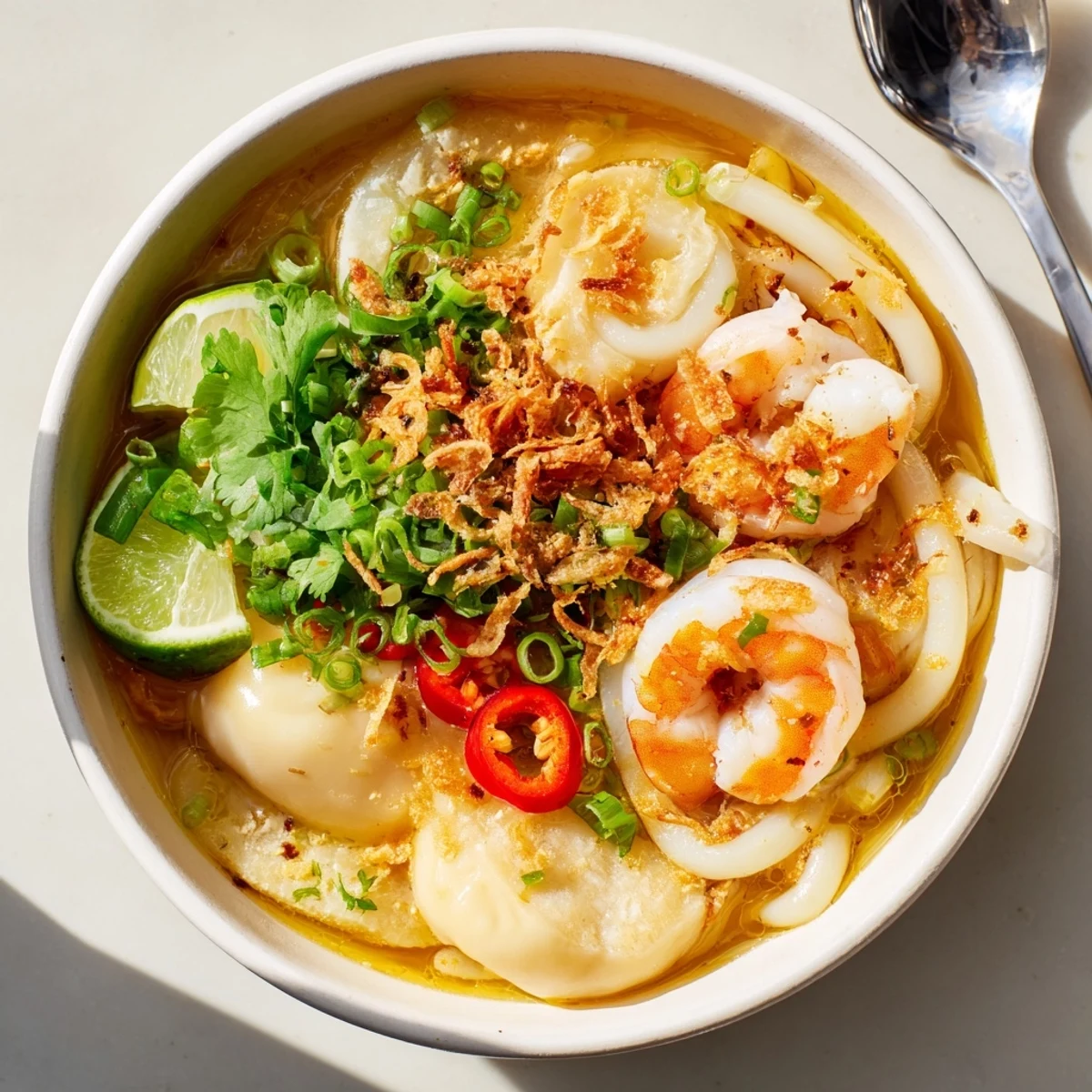
- Divide the cooked noodles among four serving bowls, then arrange the shrimp, crab meat, and fish cakes on top. Ladle the hot broth over everything, watching as it fills the bowl with steam and aroma.
- Garnish and serve:
- Scatter sliced spring onions, fried shallots, chopped cilantro, and fresh chili over each bowl. Add a wedge of lime and a grind of black pepper, then serve immediately while everything is piping hot.
 Save
Save There is something almost meditative about assembling these bowls, making sure each one gets equal attention to the garnishes and arrangement. I have found that the way you present the noodles and seafood matters almost as much as the broth itself, turning a simple soup into something that feels like a gift.
Finding the Best Noodles
Look for banh canh in the refrigerated or frozen section of Asian markets, where the fresh ones have a texture that dried versions cannot match. If you can only find dried, soak them longer and adjust the cooking time, but fresh is absolutely worth seeking out for that signature chewiness.
Working with Crab
Fresh crab gives you the sweetest, most delicate flavor, but pasteurized crab meat works beautifully in a pinch. If you are using crab claws, crack them slightly before adding to the broth so the flavor can escape, and let your guests enjoy picking the meat from the shells at the table.
Making It Your Own
Some cooks like to add quail eggs or slices of pork loin for extra protein, while others swear by a splash of annatto oil for that beautiful reddish golden hue. A little extra fried garlic on top never hurt anyone, and adjusting the broth to your taste with lime and fish sauce at the table is part of the experience.
- Keep your garnishes prepped and ready before you start assembling
- Have lime wedges and extra chili available for those who like heat
- Serve the broth extra hot, as the noodles will cool it down quickly
 Save
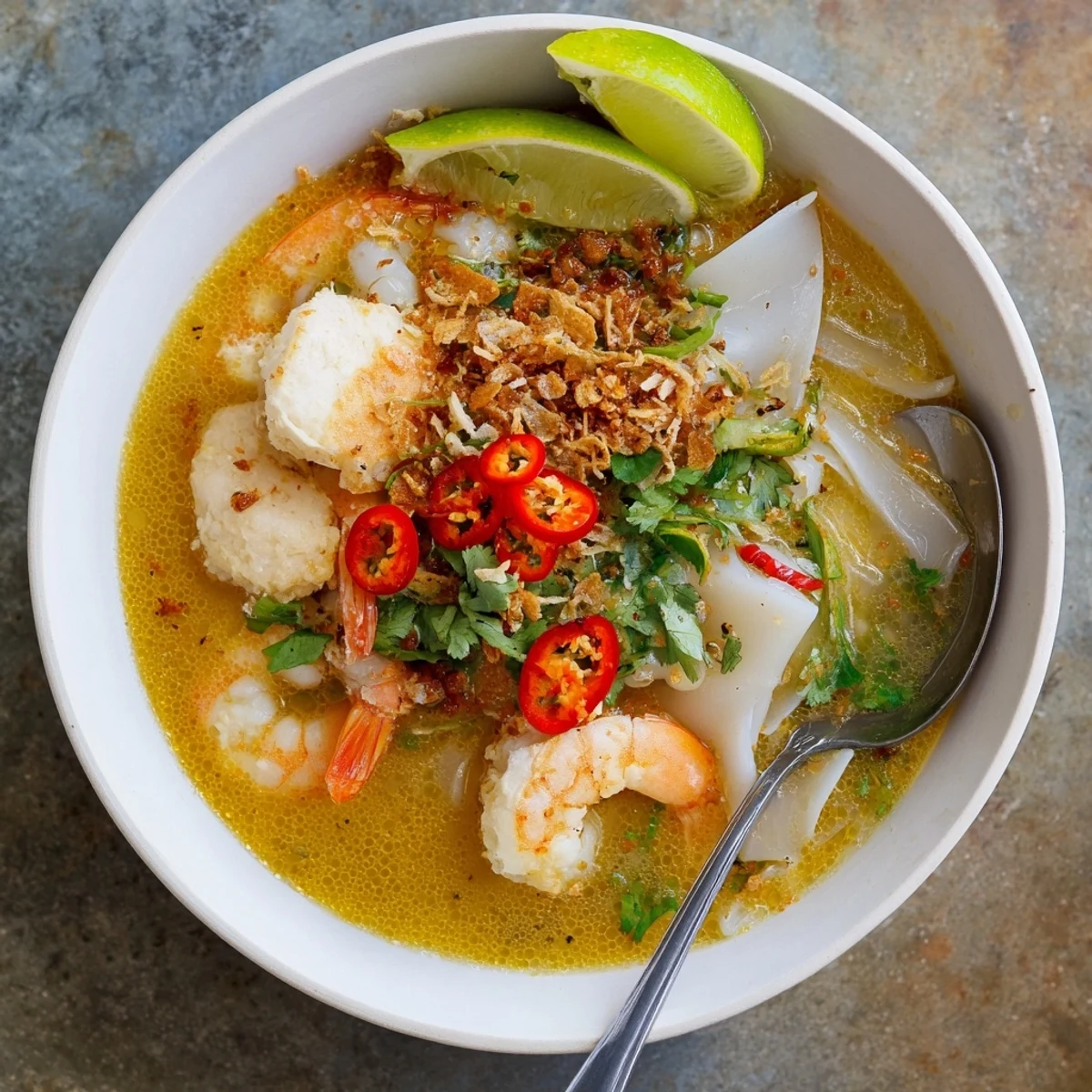
Save This soup is meant to be shared, lingering over conversation while the steam curls up from each bowl. Hope it brings as much warmth to your table as it has to mine.
Recipe FAQs
- → What makes banh canh noodles different from other Vietnamese noodles?
-
Banh canh noodles are thicker and chewier than rice noodles, made from tapioca and rice flour that gives them a satisfying bounce and translucent appearance.
- → Can I use imitation crab instead of fresh crab?
-
Yes, imitation crab or frozen crab work well as substitutes. Adjust cooking time slightly as imitation crab needs only 2-3 minutes to heat through.
- → How do I prevent the noodles from sticking together?
-
Rinse cooked noodles under cool water after draining and toss with a small amount of oil. Keep them separate from the hot broth until serving.
- → What gives the broth its red color?
-
Adding a splash of annatto oil creates an authentic reddish hue while contributing subtle earthy notes to the savory broth.
- → Is this dish spicy?
-
The soup itself is not inherently spicy. Fresh chili slices are served as a garnish, allowing diners to adjust heat level to their preference.