
 Save
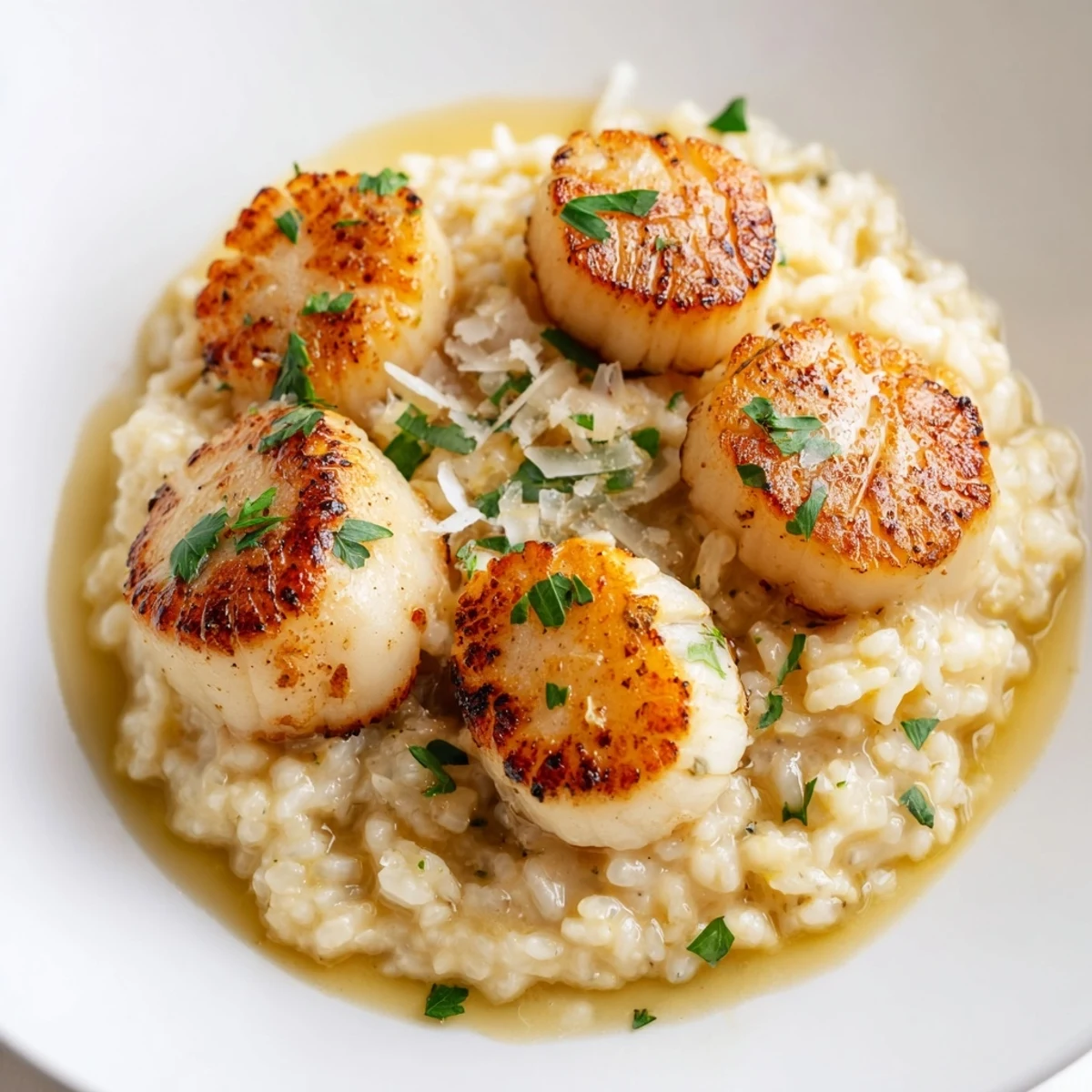
Save This dish features tender sea scallops pan-seared to a golden finish, elevated by a bright lemon garlic butter sauce. Served over a luxuriously creamy parmesan risotto, made with Arborio rice gently cooked with garlic, onion, and white wine, this combination creates a delicate balance of flavors and textures. The fresh parsley adds a touch of herbaceous freshness, making it an elegant option suitable for special occasions or a memorable dinner at home.
There's a particular magic to the moment when a scallop hits a hot pan—that immediate sizzle followed by a golden crust forming beneath the surface. I discovered this dish on an unremarkable Tuesday when I wanted to prove to myself that restaurant-quality cooking wasn't some mysterious art reserved for professionals. The risotto had been intimidating for years, but something about stirring it methodically, watching the rice gradually transform into something creamy and luxurious, felt meditative. By the time I plated those caramelized scallops over the silky parmesan risotto, I understood why this combination has graced elegant dinner tables for generations.
My neighbor knocked on my kitchen door once while I was making this, drawn by the aroma of butter and garlic escaping under the door. We ended up sharing the meal with an unexpected bottle of wine, and what started as dinner for one became the kind of evening you remember years later. That's when I realized this dish had transcended being impressive and become genuinely joyful to share.
Ingredients
- Large sea scallops: Pat them bone-dry before cooking—this is non-negotiable for getting that gorgeous golden crust. One pound yields four generous servings.
- Arborio rice: This starchy short-grain rice is what makes risotto creamy without cream alone, so it's worth seeking out rather than substituting.
- Unsalted butter: Use the good stuff here; it becomes the backbone of both the risotto's richness and the scallop sauce.
- Parmesan cheese: Freshly grated makes an enormous difference in both flavor and how smoothly it incorporates into the warm risotto.
- Dry white wine: Don't skip it or substitute with broth—the wine's acidity and flavor complexity matter tremendously.
- Fresh lemon: Both zest and juice brighten everything; bottled juice simply doesn't have the same liveliness.
- Garlic cloves: Minced fresh garlic gives this dish its soul, whether in the risotto base or the finishing sauce.
- Heavy cream: A splash at the end of the risotto makes it velvet-smooth, though you can reduce it for a lighter version.
Instructions
- Start your risotto base:
- Warm the olive oil and butter together in a large saucepan over medium heat. Add your finely chopped onion and let it soften until it becomes translucent, which should take about three minutes—you're coaxing sweetness out of the onion, not browning it.
- Toast the rice:
- Add minced garlic for just one minute, then stir in your Arborio rice. Keep stirring for another minute or two until you notice the edges of each grain becoming slightly transparent—this toasting step helps the rice hold its shape while absorbing liquid.
- Deglaze and build:
- Pour in the white wine and stir almost constantly until it's completely absorbed by the rice. You'll notice the rice beginning to soften slightly as it drinks in all that acidic flavor.
- Add broth gradually:
- Here's where patience transforms risotto from mushy to magnificent: add warm broth one ladle at a time, stirring frequently. Wait for each addition to be absorbed before adding more—this continuous stirring releases the rice's starches, creating that signature creamy texture. This usually takes twenty to twenty-five minutes total.
- Finish the risotto:
- When the rice is tender but still has a slight bite to it, remove from heat and stir in the Parmesan, heavy cream, salt, and pepper. Taste as you go and adjust seasoning—the risotto should taste rich and flavorful. Keep it warm while you sear the scallops.
- Prepare your scallops:
- Pat each scallop completely dry with paper towels—any moisture on the surface prevents browning. Season both sides generously with salt and pepper, letting the seasoning sit for a minute so it adheres.
- Sear with confidence:
- Heat olive oil in a large skillet over medium-high heat until it's shimmering and nearly smoking. Place scallops in the pan and resist the urge to move them—let them sit undisturbed for exactly two minutes so they develop a caramelized golden crust. Flip gently and cook the other side for two minutes. They should feel slightly firm when pressed, not rubbery.
- Build the sauce:
- Transfer scallops to a warm plate and tent loosely with foil. Reduce heat to medium, then add butter to the skillet and let it melt. Add minced garlic and cook for just thirty seconds—any longer and it becomes bitter. Stir in the lemon zest and lemon juice, scraping up all those browned bits stuck to the bottom of the pan, which are pure flavor.
- Bring it together:
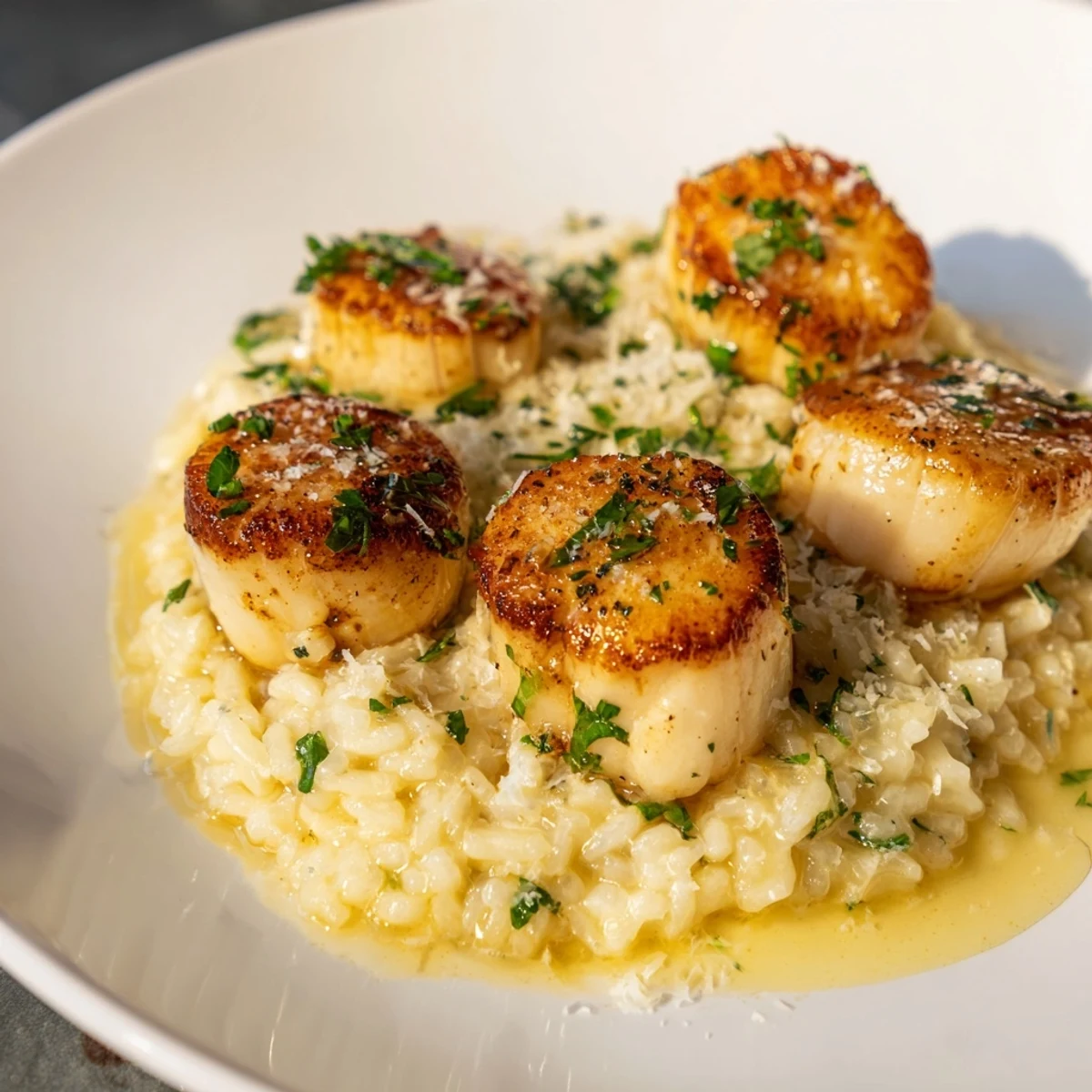
- Return the scallops to the pan, spoon that beautiful lemon-garlic butter sauce over them, and scatter fresh chopped parsley on top. Let everything warm together for just a moment.
 Save
Save I served this to someone who'd never eaten scallops before, and watching their face when they tasted that combination of buttery, lemony seafood over creamy risotto was worth every minute of stirring. That's the moment I stopped thinking of this as a showoff dish and started thinking of it as pure, accessible elegance.
The Art of Risotto
Risotto has a reputation for being fussy, but the truth is simpler: it just requires presence and attention. The constant stirring isn't punishment; it's the rhythm that builds creaminess. Once you understand that risotto is a dialogue between you and the rice rather than a formula to follow, it becomes one of the easiest fancy dishes to master. The broth stays warm, the rice drinks it in gradually, and something genuinely luxurious happens on its own timeline.
Scallops Done Right
The secret to scallops is respecting their delicate sweetness by getting out of their way. They don't need much seasoning, and they don't need long on the heat. What they need is a hot pan, a dry surface, and your permission to cook undisturbed. The moment you stop fussing with them, they reveal their natural tenderness and develop that caramelized exterior that makes people think you've trained in a professional kitchen.
Building Your Perfect Plate
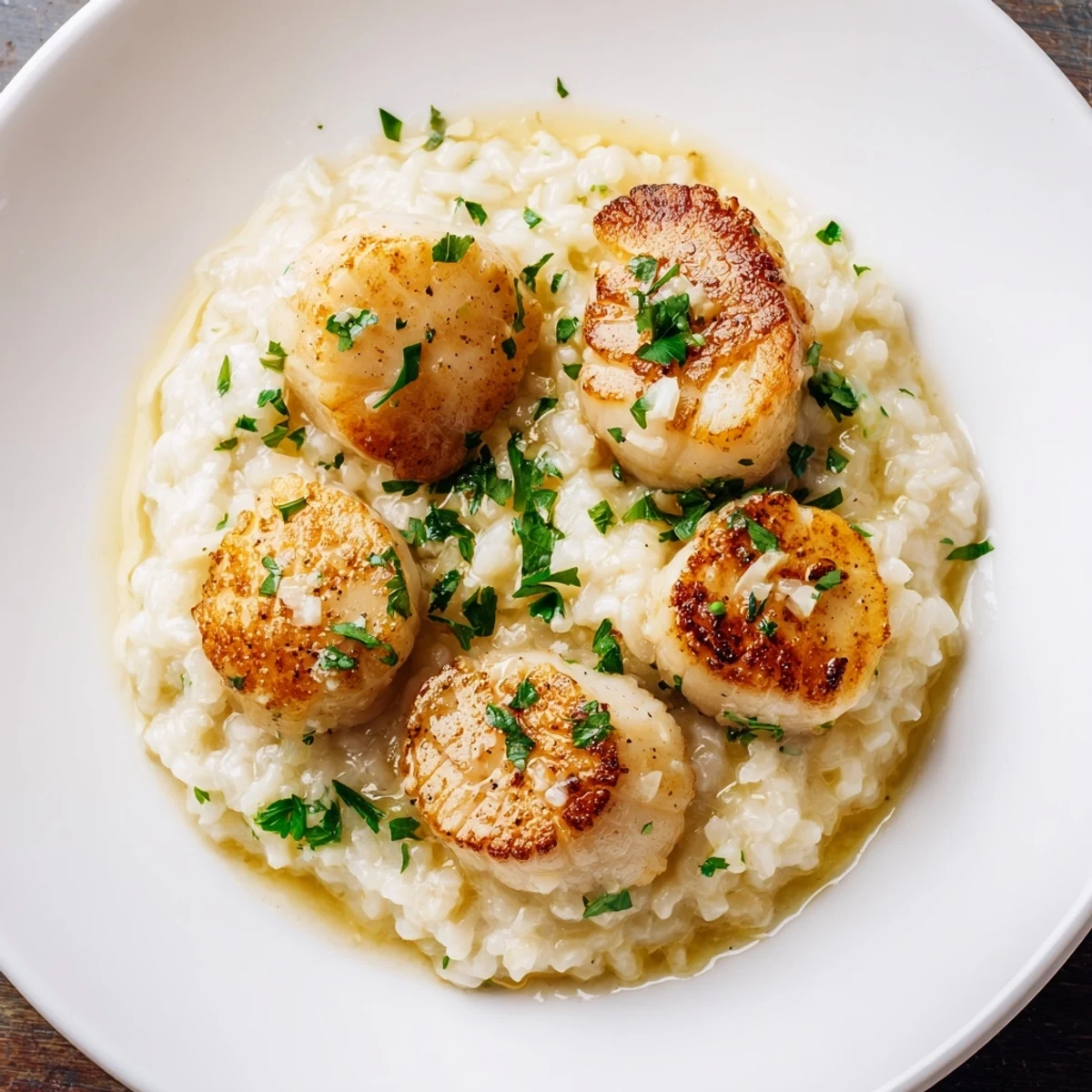
The risotto should be spooned generously into the center of each plate—think of it as the foundation and the warmth that everything else rests on. Arrange the scallops on top or nestled slightly into the risotto, then drizzle the lemon-garlic butter sauce over everything, making sure some pools into the rice. A final sprinkle of fresh parsley adds both color and that garden-fresh brightness that makes this dish sing.
- Pour extra pan sauce over the risotto itself, not just the scallops, so every spoonful tastes of butter and lemon.
- If your risotto has cooled slightly while you cooked the scallops, warm it gently over low heat with a splash of broth stirred in.
- Serve immediately on warm plates, because temperature matters tremendously with risotto—it should feel luxurious and flowing, never stiff.
 Save
Save This is the kind of meal that reminds you why cooking matters—not as performance or obligation, but as a way of creating moments worth remembering. Make it when you want to feel capable, to celebrate someone, or simply to prove to yourself that restaurant magic is just patience, quality ingredients, and trusting your own hands.
Recipe FAQs
- → How do you achieve a perfect sear on scallops?
-
Ensure scallops are thoroughly patted dry to prevent steaming. Use a hot skillet with olive oil and butter, searing undisturbed for about 2 minutes per side for a golden crust.
- → What is the key to creamy risotto texture?
-
Slowly add warm broth one ladle at a time, stirring frequently to release the rice starches, resulting in a creamy consistency without overcooking.
- → Can vegetable broth be used for this dish?
-
Yes, substituting vegetable broth keeps the flavor light and aligns with pescatarian preferences without compromising the risotto’s richness.
- → What wine pairs well with lemon garlic scallops?
-
Crisp white wines like Pinot Grigio or Sauvignon Blanc complement the bright lemon and butter flavors excellently.
- → How can the risotto be made lighter?
-
Replace the heavy cream with additional broth for a lighter yet still creamy texture without losing richness.